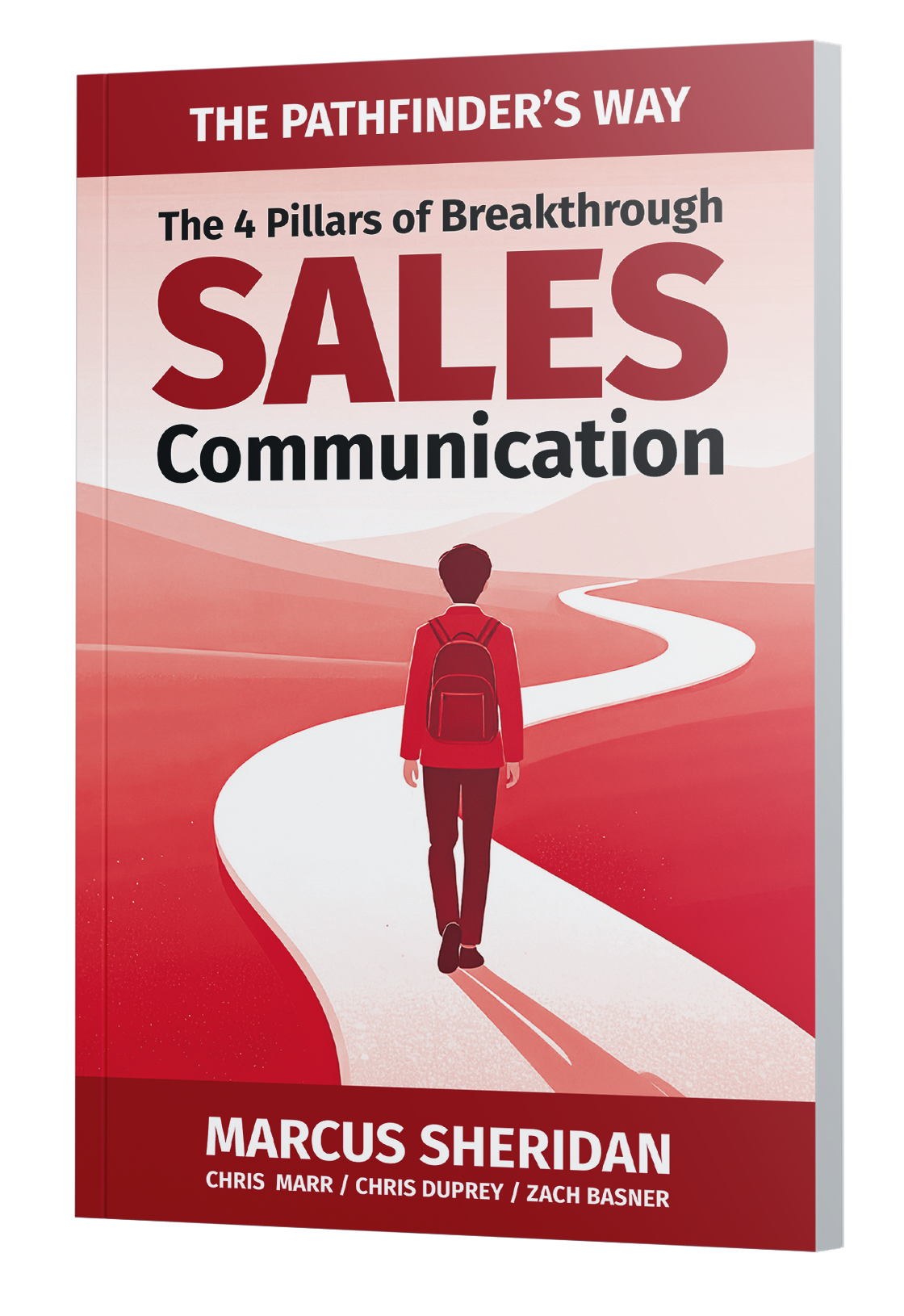
The Pathfinder Communication System
Introduction
These models — the Four Pillars and the Pathfinder’s Compass — are built from real-world experience and designed to help professionals communicate with clarity, confidence, and impact.
Whether you’re leading a team, speaking with customers, managing projects, or coaching people through difficult situations, the Pathfinder approach enables deeper connection, better thinking, and more meaningful outcomes in every conversation.
The Problem With How Most People Communicate
Most leaders today are unknowingly robbing their teams of professional growth — not because they don't care, but because they were never given a system for communicating in a way that develops the people around them.
Most salespeople are walking into conversations without a framework that builds immediate trust and genuine connection with the people they're trying to serve.
And most teams are operating without a shared language — everyone communicating differently, everyone interpreting differently, with no common foundation to build on.
The result?
Cultures that feel broken. Sales teams that consistently underperform. Leaders who burn out trying to create growth around them but can't seem to produce other leaders.
The Pathfinder Communication System exists because this problem is universal — and it's fixable.
What is a Pathfinder?
A Pathfinder is the highest form of communicator in the world of sales and leadership today. They are others-focused, deeply curious, and committed to guiding people toward their own breakthroughs.
Instead of giving answers or controlling conversations, a Pathfinder creates clarity and transformation through questions, structure, and intentional communication.

The Four Pillars of Breakthrough Communication
The Four Pillars are the behavioral tools that create forward momentum, clarity, trust, and depth in every conversation. They apply universally — in sales, leadership, coaching, and everyday problem-solving.

- Eliminates defensiveness
- Prevents the “flinch moment”
- Creates psychological safety
- Builds momentum
- Keeps conversations constructive even during objections or conflict

Proactively Prevent Predictable Problems
- Disarms objections and hesitation early
- Sets tone, expectations, and rules of engagement
- Reduces resistance in difficult conversations
- Establishes authority and trust
- Keeps conversations moving forward

- A great question induces thinking and breakthrough in the other
- Encourages ownership and insight
- Prevents assumption-based decisions
- Creates depth and understanding
- Replaces telling, defending and explaining

- Reach “aha” or lightbulb moments
- Reveal the emotional and operational impact of issues
- Uncover root causes
- Connect the dots for themselves
- Dramatically accelerate the path to root cause

The Pathfinder's Compass
Most professionals default to telling. The Pathfinder's Compass is the framework that shows you where you are, why it's costing you, and how to become the kind of communicator who changes lives — a true Pathfinder.
Watch Marcus Sheridan walk you through the Pathfinder's Compass — the two axes, the four communication styles, and the question that will change how you lead and sell forever.
The interactive Compass below maps two axes — how much you ask versus tell, and whether your conversations primarily benefit you or your audience — creating four quadrants, each representing a distinct communication style: the Instructor, the Dictator, the Lawyer, and the Pathfinder.
Use it alongside the video to identify your dominant style and discover what you need to do to become a Pathfinder.

Thanks to Chris Duprey’s coaching, our advisors are more skilled, our clients are better served, and our business is stronger. We could’ve spent years trying to implement this ourselves – but without Chris, we never would’ve seen these results.

I’ve worked with many sales training companies, but none compare. This isn’t just another training program—it’s a system that embeds world-class sales skills into your organization. I’m borderline obsessed with it, and if you give it an honest shot, I’m confident it will transform your team too.

How the System Works Together
The Pathfinder’s Compass
When combined, they create a communication system that is:
- Clear
- Connected
- Others-focused
- Insight-driven
- Transformational
This system is what turns ordinary conversations into moments of genuine breakthrough — whether in sales, leadership, or team contexts.
Where This System Applies
- Deep discovery
- Objection handling
- Eliminating assumptions
- Creating strong buyer connection
- Building momentum toward decisions
- Developing people instead of creating dependency
- Facilitating difficult conversations
- Building team alignment
- Creating psychological safety
- Driving accountability
- Reducing friction
- Increasing transparency
- Improving collaboration
- Encouraging ownership
- Strengthening problem-solving