

Walk into most marine dealerships and the first question a salesperson asks is some version of: “So, what are you looking for?”
It sounds reasonable. It’s not.
“What are you looking for?” sends the conversation immediately to specs, size, and budget. It tells the buyer: We’re here to talk about boats. And that’s exactly the wrong place to start.
Because here’s what nobody in your showroom is saying out loud but everyone already knows: Nobody actually buys a boat. They buy what the boat makes possible. Early mornings on the water with their son before he leaves for college. The version of themselves that finally slows down long enough to be present. A story they’ll tell for the rest of their lives.
The boat is just the vehicle. Your job is to find the destination.
And there is one question that opens that door better than anything else in the Foundational Five.
Question 2: The Past
After you’ve delivered the Honest Agreement — and once that foundation of trust is in place — you ask this:
“What’s the most memorable experience you’ve had on the water? Tell me about that day.”
That’s it. Two sentences. But what happens next is extraordinary.
Watch their faces. Something shifts. Almost immediately they stop being a prospect evaluating an investment and become a person reliving a moment that meant something to them. Their eyes light up. They smile without meaning to. Then they start talking — really talking — in a way that almost never happens in a typical sales conversation.
Perhaps it’s the morning they caught their first big fish as a kid. A Fourth of July on the lake with people they love. Maybe a quiet sunset cruise with their spouse when everything in life feels exactly right.
Whatever it is, they just showed you the emotional core of this purchase. And that changes everything.
Why This Question Does What Nothing Else Can
Most salespeople think their job is to find the right boat. That’s backwards. Their job is to find the right why — and then match a boat to it.
When someone describes their most memorable day on the water, they’re not giving you a preference. They’re handing you the emotional blueprint for this entire sale. They’re telling you what they’re really trying to recreate, or protect, or amplify.
Once you have that, you don’t show six boats hoping one sticks. You show them one boat — the one that fits the life they just described to you — and you explain exactly why, in terms of that memory, this is the right choice.
That is how you go from “let me think about it” to “where do I sign.”
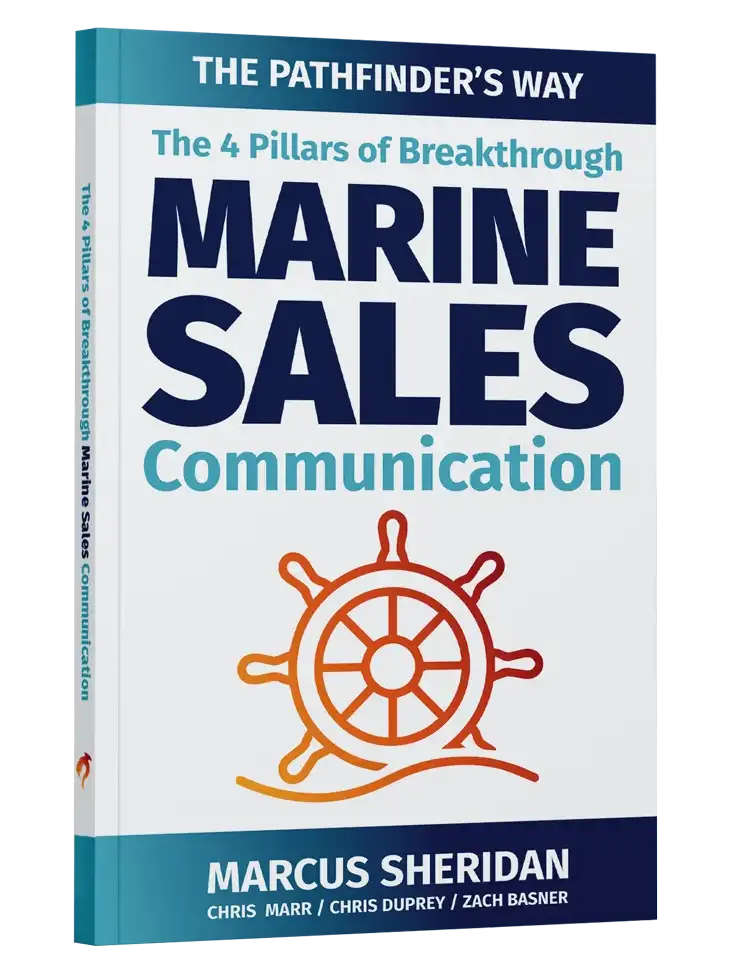
Download The 4 Pillars of Breakthrough Marine Sales Communication for FREE
Get the system that helps marine sales reps move beyond specs and walk-throughs and into high-trust, buyer-led conversations.
Alternatively, order your copy on Amazon:
The Mistake Almost Everyone Makes Here
Most salespeople — even good ones who instinctively know to ask about emotions — make one critical error: They move on too quickly.
The prospect gives an answer. The salesperson nods warmly, says something like “That sounds amazing,” and moves to the next question.
Don’t do this.
The first answer is almost never the full story. It’s the surface. Your job is to go deeper — which is where the real gold lives.
When they finish their initial answer, follow up:
- “What made that moment so special?”
- “Who was with you?”
- “What do you remember feeling in that moment?”
This is called the Law of Three — the idea that you need to ask at least three questions along the same vein to get to the emotional core. The first answer is what they thought you wanted to hear. The third answer is closer to the truth.
If someone says, “I’ll never forget this day fishing with my son when he was about twelve — just the two of us, no phones, no distractions. We talked for hours. He told me things he’d never brought up before,” — that person isn’t buying a fishing boat. They’re buying connection with their child. They’re buying the chance to have that conversation again before life gets in the way.
Knowing that changes how you present every single boat you show them.
Take Notes. Reference Them Later.
Write down what they tell you. Word for word if you can.
Because when you’re standing on the dock thirty minutes later and you see their eyes drift toward the details of a particular console, you want to be able to say: “Remember when you told me about that morning with your son? The way the cockpit is set up on this one — the way you can both stand here and fish — that’s exactly the setup that makes those days happen more often.”
That sentence does more than any spec sheet ever will.
The buyer doesn’t feel sold. They feel understood. And when someone feels understood, they trust you. And when they trust you, they buy.
What You’re Really Listening For
As they answer this question, pay attention to four things:
- Who was involved? (Family, friends, alone — this tells you how they use the boat.)
- What was the activity? (Fishing, cruising, watersports — this points toward the right category.)
- What was the emotion? (Joy, peace, adventure, connection — this is your selling language.)
- What was the setting? (Lake, ocean, river — this affects the right boat entirely.)
All of this tells you what they’re actually buying. And again: it’s rarely just a boat.
The Bigger Picture
As we covered in the opening article, the defining failure of marine sales is that we focus on the boat instead of the boater. Step 2 — The Past — is the antidote to that problem.
It forces the conversation to start where it should always start: with the human being sitting across from you, and the moments in their life that made them walk through your door today.
Once you understand that, you’re no longer a salesperson. You’re a guide.
And that, as we talked about in the previous article, is only possible when the Honest Agreement has already created the trust that makes genuine answers possible.
Coming up next, step 3 — The Present — and why understanding why they’re buying now is the key to urgency, timeline, and closing deals that actually stick.
- Read the next article: The Sales Question Every Marine Dealer Needs to Ask
- Read the previous article: Why Boat Buyers Lie — And How to Stop It
Download The 4 Pillars of Breakthrough Marine Sales Communication for FREE
Get the system that helps marine sales reps move beyond specs and walk-throughs and into high-trust, buyer-led conversations.
Alternatively, order your copy on Amazon: