

They’re not bad people.
Let me be very clear about that upfront. The buyers who walk into your dealership, spend two hours with your sales team, seem genuinely excited, and then disappear — they’re not dishonest by nature. They’re not trying to waste your time.
They’re just being polite.
And that politeness is quietly destroying your sales numbers.
The Most Expensive Sentence in Boat Sales
“Let me think about it.”
Five words. Sounds reasonable. Feels like progress. It is neither.
“Let me think about it” almost never means what it sounds like. What it usually means is: I don’t like something about this, but I don’t want to tell you because I don’t want to hurt your feelings or have an awkward conversation.
So instead of being honest, they smile, shake your hand, and ghost you.
Meanwhile, you follow up twice, maybe three times, and then the lead goes cold. You chalk it up to a tire-kicker. You move on.
But here’s the real story: They were a buyer. They just didn’t trust the conversation enough to be honest with you. And without honesty, you had no chance.
This is the single biggest problem in marine and boat sales. Not inventory. Not pricing. And it’s not the dealer down the road either.
It’s the absence of a foundation for truth-telling.
Why It Happens
Think about the typical boat buying experience from the customer’s perspective.
They walk in. Someone who doesn’t know them at all immediately starts walking them toward boats, talking about features, asking what their budget is. The whole thing feels transactional from the moment it starts.
In that environment, being honest feels risky. “I don’t like this layout” might upset the salesperson. Admitting “this is more than we planned to spend” feels embarrassing. And “I’m not sure we’re ready” seems like admitting defeat.
So they default to the socially comfortable response: “Let me think about it.”
You never had a chance to solve the real problem, because you never knew what the real problem was.
The Fix: The Honest Agreement
The Honest Agreement is the first step of the Foundational Five. It’s a verbal contract — a commitment you establish with your prospect before the conversation even begins.
The concept is simple but powerful: You explicitly ask your buyer to be honest with you. You make it safe for them to tell you the truth. And you get a verbal commitment from them that they will.
Here’s how it sounds in practice:
“Mr. and Mrs. Jones, before we get started, I want to address something important. The purchase of a boat is a big deal — a significant financial investment — and I know you don’t want to make a mistake. So my commitment to you is that I’m going to be completely open and honest with you throughout this process. Fair?”
Wait for them to agree. Then continue.
“And because this matters so much, I’m going to ask you some questions you probably haven’t been asked about boats before. Questions that will help us think this through clearly and make sure we find exactly the right boat for you. Can we do that?”
Again, wait for agreement.
“And just as I’ll be honest with you, I need you to be completely honest with me. I promise — you will not hurt my feelings by telling me the truth. So if I show you something today that you don’t love, what do you need to do?”
Let them say it: “Tell you.” “Be honest.”
“Exactly. Because otherwise we make mistakes. So will you commit to being completely open with me about this?”
Wait for a real yes. Not a nod. Not “sure.” A yes.
That exchange — done properly, with eye contact, with genuine warmth, with pauses that let it land — changes everything.
Why This Works
Something physical happens in the room when you deliver The Honest Agreement well. You’ll see it. Shoulders drop. People lean in a little. The guardedness they walked in with starts to dissolve.
Because here’s what they’re experiencing: This person is different. This doesn’t feel like a normal sales conversation.
You’ve just done something almost no one in your industry does. The dynamic that usually goes unspoken? You named it. And now honesty feels not just safe, but expected.
And now — because they’ve verbally committed to being straight with you — when you show them a boat they don’t love, they’ll tell you. When the price gives them pause, they’ll say so. When there’s a concern about the spouse who couldn’t make it today, it comes up now instead of derailing everything later.
You can also reference it throughout the conversation: “Remember, you promised you’d be straight with me. What are you really thinking about this layout?”
That’s a question you could never ask without the foundation you just built.
The Most Common Mistakes
A few things to watch for:
Don’t rush it. This is not a script to race through. Slow down. Make eye contact and let each section land before you move to the next.
Don’t accept vague responses. “How does that sound?” gets you “Fine.” Fine is not a commitment. You need a real yes. Ask for it.
Don’t sound like a robot. The exact words matter less than the four core elements: the importance of the purchase, your commitment to honesty, your intention to ask deep questions, and their commitment to honesty in return so make it yours.
Don’t forget to use it later, when hesitation shows up in the middle of a boat tour, you have something to reference. That’s the whole point.
The Foundation Everything Else Is Built On
Here’s the thing about the Honest Agreement that makes it so powerful: It doesn’t just improve this conversation. It changes the entire nature of the relationship.
When buyers know they can tell you the truth, they do.
And when they tell you the truth, you can actually help them. And when you actually help them, they buy — and they refer everyone they know.
It also makes the remaining four questions in the Foundational Five dramatically more effective. Because the answers you’ll get to those questions — once you’ve established this kind of trust — are real, they’re not polished. Not guarded. Real.
As we discussed in the opening article, the problem in marine sales isn’t the boats. It’s the connection. The Honest Agreement is where that connection begins.
In the next article, we look at step 2 — The Past — and why asking about your buyer’s most memorable experience on the water is one of the most powerful moves you can make in any sales conversation.
- Read the next article here: Boat Buyers Don’t Want a Boat. They Want a Feeling
- Read the previous article: Why Boat Salespeople Lose Deals Before They Start
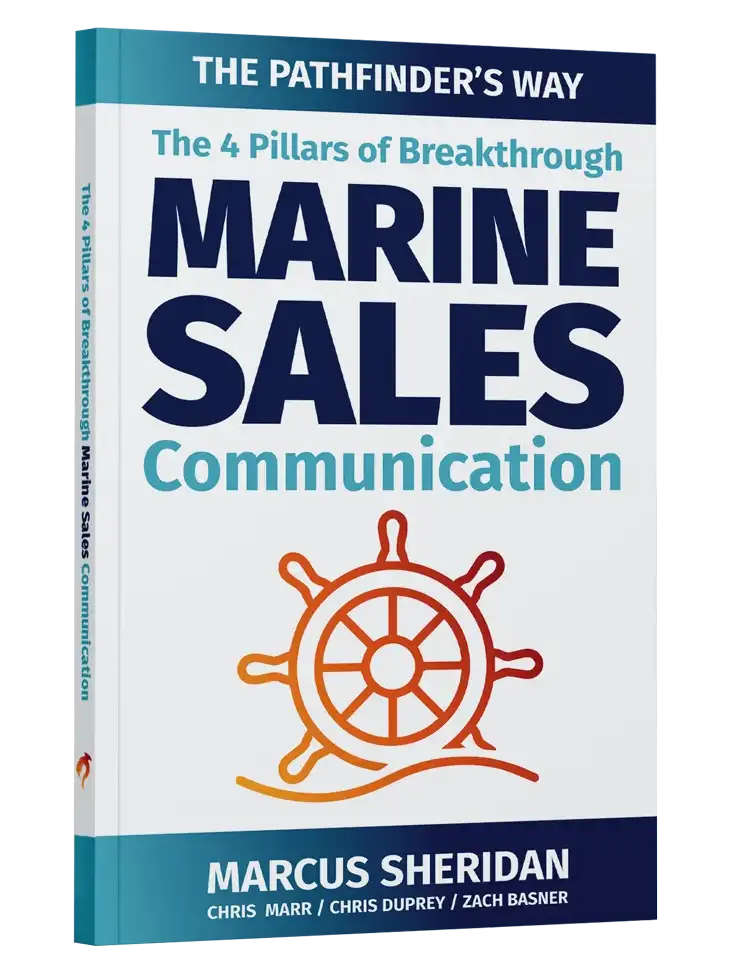
Download The 4 Pillars of Breakthrough Marine Sales Communication for FREE
Get the system that helps marine sales reps move beyond specs and walk-throughs and into high-trust, buyer-led conversations.
Alternatively, order your copy on Amazon: