

You’ve been here before. When it comes to qualifying boat buyer needs, the process can feel familiar yet always requires careful attention.
The conversation felt perfect. You understood the buyer. You showed them the right boat.They seemed excited. And then somewhere between that moment and the close, it came apart — because of something you never saw coming.
It could have been a feature that wasn’t there. An expectation you didn’t know about. Sometimes it’s an opinion from a brother-in-law who’s never bought a boat in his life but has very strong feelings about horsepower.
Here’s the hard truth: Most of those deals didn’t die at the close. They died in the discovery. Specifically, they died because one question never got asked.
Step 5: The Non-Negotiables
The final step in the Foundational Five is this:
“When you consider buying your next boat, what are the non-negotiables? What are the must-haves?”
Let them answer. Then — and this is the part most salespeople skip — follow up with:
“And why is that a must-have for you?”
That single word — why — is where the real information lives.
Why the “Why” Changes Everything
Without the why, qualifying boat buyer needs becomes guesswork — you’re taking a feature request at face value. With the why, you understand whether that request is genuinely non-negotiable or just a preference built on someone else’s opinion.
Consider this: A buyer says they need at least 250 horsepower. Non-negotiable.
You ask why.
“My brother-in-law said anything less won’t pull skiers well.”
That is not a requirement based on their experience. It’s not something they discovered through years of boating. It’s secondhand advice from someone who may or may not know what he’s talking about — and it may have nothing to do with how this family actually uses a boat.
Now you can have a real conversation. You can explore what watersports actually look like for them, how many people they’re typically pulling, where they ski — and you can show them that the right setup for their life may not be what their brother-in-law prescribed.
That is only possible because you asked why.
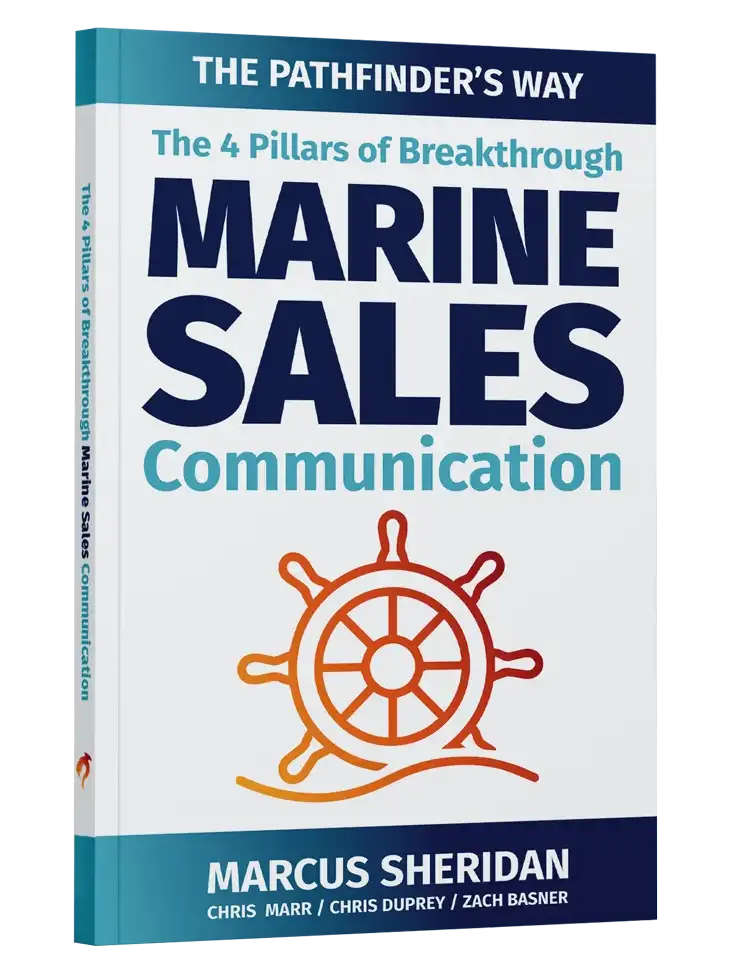
Download The 4 Pillars of Breakthrough Marine Sales Communication for FREE
Get the system that helps marine sales reps move beyond specs and walk-throughs and into high-trust, buyer-led conversations.
Alternatively, order your copy on Amazon:
Catching Contradictions Early
This is also the question that helps you catch something critically important: when what someone says they must have doesn’t actually match the vision they described in Step 4.
Think about it. In Step 4, they painted a picture of a quiet Saturday — just them and their spouse, anchored in a cove, peaceful and private. Then in Step 5, they say they need seating for twelve people.
That’s a contradiction worth exploring.
“Help me understand something. When you described your perfect day earlier, it was pretty intimate — just the two of you. But now you’re saying you need space for a dozen people. Tell me about that.”
What you often find is that the “must-have” came from somewhere outside the actual vision. Perhaps it’s the one big family trip they take per summer. More capacity just sounds like better value to them. Or they heard it from someone else.
But when you gently surface the contradiction, it opens a real conversation — and often frees them from a constraint that was quietly limiting their options.
Common Non-Negotiables and What They Often Really Mean
A head — a bathroom on the boat. Ask why, and you’ll usually discover it’s not about the room itself. It’s about enabling longer days. It’s about making it possible for the whole family to be on the water for hours without anyone having to cut the day short. The real need is time. The head is just one way to solve it — but not the only way.
A specific boat type. “We need a fishing boat.” Ask why, and you’ll sometimes find the features they’re describing are not exclusive to fishing boats at all. They just don’t know what else is available.
A brand. Ask why, and you’ll often find loyalty built on one experience — sometimes a great one, sometimes just familiarity — that may or may not serve their actual vision.
None of this means you dismiss what they said. Qualifying boat buyer needs isn’t about dismissing must-haves, it’s about understanding the reason behind them. You never dismiss a must-have. But understanding the reason behind it gives you the ability to serve that need in the best possible way not just the most literal way.
What This Step Does for the Sale
By the time you’ve asked all five Foundational Five questions, something important has happened.
You have the emotional foundation from their past experience. You understand the urgency and trigger behind the purchase. Their detailed vision of what success looks like is right in front of you. And you’ve genuinely qualified boat buyer needs — with the reasoning behind each one.
Together, those five things give you everything you need to walk to the right boat, show it the right way, and close without guessing.
No more showing six boats hoping one sticks. Late-stage surprises from a must-have you never knew about are gone. Deals stop collapsing because an expectation never surfaced.
As we covered at the start of this series, the reason most deals fail isn’t the boat. It’s the discovery. And Step 5 is the last piece of a discovery process that actually works.
What You Say When You Stand Up from the Table
After the Foundational Five — all five, in sequence, with genuine curiosity and real follow-up — you don’t guess which boat to show. You know.
You stand up, and you can say something like this:
“Okay. Based on everything you’ve shared — the memories you want to recreate with your son, the fact that this summer is the summer, your vision of being anchored at the sandbar with the whole family, and your must-haves around space and reliability — I know exactly which boat I want to show you. And I want to explain specifically why.”
That sentence does something that a typical walk through the showroom can never do. It proves to the buyer that you were actually listening. That you understood. That you’re recommending something specific to them — not just whatever you have in inventory.
And that trust, built across 15 to 20 minutes at a table before a single boat was shown, is the reason this sale closes differently than every other sales conversation they’ve had.
In our final article, we bring all five elements together and give you the complete picture — how the Foundational Five works as a sequence, what it produces, and exactly what to do next to start using it in your dealership.
- Click here for the next article: The 15-Minute Boat Sales Conversation That Changes Everything
- Take a look at the previous article: How to Sell More Boats by Selling the Dream First
Download The 4 Pillars of Breakthrough Marine Sales Communication for FREE
Get the system that helps marine sales reps move beyond specs and walk-throughs and into high-trust, buyer-led conversations.
Alternatively, order your copy on Amazon: