

Most home improvement sales consultations start the same way.
Rep arrives. Brief hello. Then it’s straight to the space — the kitchen, the yard, the windows that need replacing. Measurements get taken. Photos get snapped. The rep asks a few questions about what the homeowner is thinking and starts mentally putting together a proposal.
It’s efficient. It’s professional. And it completely misses the point.
Because before you look at a single wall or window, there’s a question you should be asking. One that has nothing to do with square footage or materials or budget. One that almost no contractor ever thinks to ask.
It’s Step 2 of the Foundational Five. And when it lands right, it changes the entire trajectory of the sale.
The Question
Once The Honest Agreement is in place and that foundation of trust is established, you ask this:
“Before we walk through the space, I want to understand something. Tell me about what first attracted you to this home. What made you say ‘this is the one’?”
That’s it. But what happens next is something most salespeople have never experienced in a consultation.
Watch their faces. Something changes. They stop being a homeowner in evaluation mode and they become a person remembering a moment that meant something to them. For remodelers, it might be the original hardwood floors they fell in love with, or the neighborhood, or the potential they saw in a space that everyone else had walked past. Window and door companies might hear about the Sunday morning light that was streaming through the glass when they first walked through. And for landscapers, it’s often the yard — the whole reason they bought the house — that they’ve done nothing with for three years.
Whatever it is, they just gave you the emotional foundation of this entire sale. And that changes everything about what comes next.
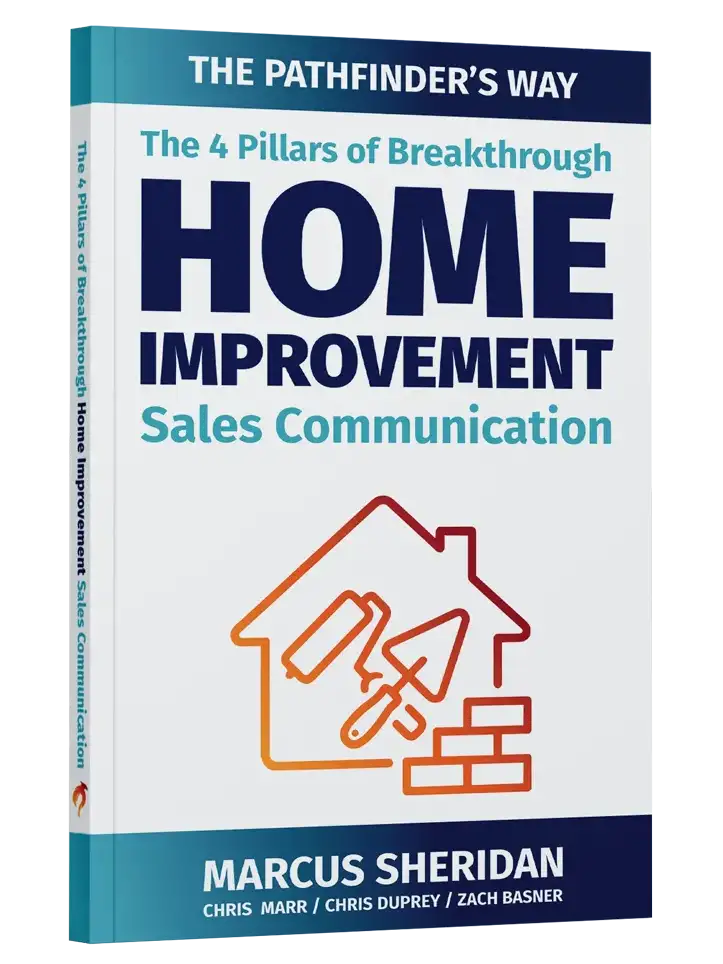
Download The 4 Pillars of Breakthrough Home Improvement Sales Communication for FREE
Stop rushing to specs and pricing. Learn the communication system that transforms surface-level estimates into controlled, high-trust conversations.
Alternatively, order your copy on Amazon:
Why This Matters More Than You Think
Here’s what this question actually does: it connects the project to something real.
Not to square footage. Not to a style preference they found on Pinterest. To the actual reason they chose this home and what it means to them.
A homeowner who bought their house because of the natural light pouring through the original windows is not the same sale as a homeowner replacing windows purely because their heating bills are out of control. They might be looking at the same product. They’re buying completely different things. And if you don’t know which one you’re dealing with, you’ll propose the right solution for the wrong reasons — and wonder why it didn’t land.
Great home improvement professionals don’t just sell projects. They guide, they uncover, and they help homeowners see their vision clearly before proposing a solution. Miss that step, and you’ve likely lost the deal.
Step 2 is how you stop missing that step.
The Mistake Almost Everyone Makes
Even salespeople who instinctively know to build rapport before getting into the project tend to make one critical mistake here: they move on too quickly.
The homeowner gives an answer. The rep nods warmly, says something encouraging, and moves to the next question.
Don’t do this.
The first answer is almost never the full story. It’s what came to mind first, which is usually the surface version. The real answer — the one that actually drives the sale — lives a layer or two deeper.
When they finish their initial response, follow up:
- “What was it about this home that made you choose it over others you looked at?”
- “What were you envisioning when you first moved in?”
- “What moments here have meant the most to you over the years?”
This is the Law of Three at work — the principle that you generally need to ask at least three questions along the same thread before you reach the emotional core. The first answer is what they thought you wanted to hear. The third answer is the truth.
Here’s what that looks like in practice. A homeowner says they’re looking to update their kitchen. Fine. You ask what first attracted them to the home. They mention the layout, the neighborhood. Good start. You go deeper. And then they say: “Honestly, we almost didn’t buy it because the kitchen was so outdated. But the rest of the house was so full of character — the original floors, the molding, the light — we figured we’d update it within a year or two. That was twelve years ago.”
Now you understand something that changes your entire design approach. They value the character of this home deeply. Whatever you propose cannot strip that out. This isn’t about creating a showroom kitchen — it’s about honoring what they loved about the house while finally making the space functional for how they actually live.
That’s a completely different brief. And you only got it because you went deeper than the first answer.
Write It Down. Use It Later.
Take notes during this question. Word for word if you can.
Because thirty minutes later, when you’re presenting your solution, you want to be able to say: “Remember when you told me what first drew you to this home — the character, the light, the feeling that it had a soul? This design honors that. We’re not reinventing the space, we’re finally fulfilling the vision you had when you bought it.”
For a landscaper it sounds like: “You told me the yard was the whole reason you bought this house. Three years later it’s still just grass and potential. This design is finally doing justice to what you saw when you first walked around the back.”
For a window company: “You said you’ll never forget that Sunday morning when you first walked through — the light coming through the windows, your wife turning to you and saying ‘this is home.’ These windows are going to give you that feeling back, with none of the drafts and none of the bills.”
Those aren’t sales lines. They’re the homeowner’s own story, reflected back in a proposal that was built specifically for them. That’s an entirely different experience from handing someone a quote.
What You’re Actually Listening For
As they answer this question, pay attention to four things specifically.
What they valued when they bought versus what’s changed — this tells you what needs to be preserved and what’s been lost. The life stage they were in then versus now — a couple who bought a house for their young family and whose kids are now teenagers has a very different project than the same house would suggest. Their original vision versus current reality — that gap is often the whole reason they called you. And the emotional connection to the property — what they care about most, beyond the functional.
All of that tells you what they’re really buying. And as we said in the first article — it’s rarely just the project.
The Bigger Picture
Step 2 exists because of the problem we identified in the first article: we focus on the project instead of the person. The Past is the correction.
It forces the conversation to start where it should always start — with who this homeowner is, what this home means to them, and what this transformation is actually about.
And it only works because The Honest Agreement has already done its job. The psychological safety that makes a homeowner open up about what the house means to them — that doesn’t happen by accident. It happens because you built it deliberately before you asked a single question.
In the next article, we cover Step 3 — The Present — and why the timing of a project tells you almost everything about whether you have a real buyer in front of you.
- Click here for the next blog: Why Timing Is the Most Underrated Question in Home Improvement Sales
- Read the previous blog here: Why Your Homeowners Aren’t Being Straight With You (And How To Fix Your Sales Conversations)
Download The 4 Pillars of Breakthrough Home Improvement Sales Communication for FREE
Stop rushing to specs and pricing. Learn the communication system that transforms surface-level estimates into controlled, high-trust conversations.
Alternatively, order your copy on Amazon: