

Somewhere in the middle of most boat sales conversations, a salesperson makes a critical error.
They guess.
The buyer has said enough for the rep to think they know what’s needed, so they start steering — toward the 24-footer, toward the pontoon, toward whatever model they sold three of last month. They think they’re being efficient. They think they’re reading the room.
What they’re actually doing is projecting their own assumptions onto someone they don’t fully understand yet.
The result? They show the wrong boat. Or they show the right boat for the wrong reasons. And neither one closes the way it should.
There’s a question in the Foundational Five that eliminates this problem entirely.
Step 4: The Future
Once you understand the emotional foundation (The Past) and the reason they’re buying now (The Present), you ask this:
“When you think about the perfect day on the water — who are you with and what are you doing? Give me as much detail as possible.”
That last phrase — give me as much detail as possible — is not filler. It’s an explicit invitation to go deep. It gives the buyer permission to stop being practical for a moment and actually describe the life they’re trying to buy into.
And when they do, something remarkable happens.
Without knowing it, they tell you exactly which boat they need.
The Vision Reveals Everything
Listen carefully to what a real answer to this question sounds like:
“It’s a Saturday morning around nine. We load up the boat — me, my wife, our two kids, maybe another family. We head out to the sandbar, anchor up. The adults are in the water with drinks, the kids are jumping off the back. Nobody’s checking their phone. We’re out there for hours. That’s it. That’s the dream.”
Now look at what that answer just told you:
They need space for eight to ten people. They’ll anchor for hours, so shade and seating matter enormously. The kids need easy water access — a good swim platform, somewhere to jump from. The adults need a social layout, space to gather, room to feel like it’s more than just a boat. Sound system. Storage for a full day out.
You now know exactly which boat to show them. And you know what features to highlight — not because they’re on a spec sheet, but because they connect directly to the day this family just described to you.
That is an entirely different sales conversation. And it starts with letting them paint the picture.
The Most Common Mistake: Accepting Vague Answers
Prospects will often give you a soft version of this first.
“Oh, you know — just family and friends having a good time.”
That’s not enough. Press gently:
- “Paint me a picture. What time of day is it?”
- “Where are you going?”
- “What are the kids doing while you’re out there?”
- “What are YOU doing?”
- “How long are you out there?”
You’re not interrogating them. You’re inviting them to dream. Most people don’t actually resist this — they’ve just never been asked. Once they realize you want the real version, not the polite version, they open up.
And the detail that comes out in that second or third answer? That’s what you write down. Because you will reference it on the dock, during the presentation, and when handling any hesitation that comes up later.
Don’t Interrupt the Vision
When they start describing their perfect day, your job is to listen. Not to jump in with clarifying questions, not to match their enthusiasm with an “Oh, we have a boat for exactly that!” — just listen.
Let them fully immerse themselves. The more completely they build the picture in their own mind, the more emotionally invested in that vision they become. They’re not just describing what they want. They’re starting to want it more deeply.
That’s when the right boat, shown the right way, closes itself.
This Is How You Reference It Later
Here’s how this plays out on the dock:
“Remember when you described that perfect day — you, your wife, the kids, anchored at the sandbar, everyone jumping off the back? This swim platform is designed specifically for days like that. And this layout — the way the adults can gather here while the kids are back there — this is the boat you were describing.”
They’re nodding before you finish the sentence.
You’re not selling features. You’re reflecting their dream back at them in a boat they can touch and stand in. That’s a completely different experience from walking someone through a spec sheet and hoping something resonates.
What This Step Connects To
If you’ve been following this series, you’ll notice the Foundational Five builds on itself deliberately.
The Honest Agreement created the trust that makes real answers possible. The Past uncovered the emotion behind the purchase. The Present revealed the urgency and the why-now. And now The Future takes all of that and turns it into a specific, vivid, detailed vision.
By the time you complete Step 4, your buyer has told you more about themselves and what they truly want than they’ve probably told any other salesperson they’ve ever met.
That is not an accident. It’s the result of a deliberate sequence, used with genuine curiosity, by someone who is more interested in understanding than selling.
This is what it means to be a Pathfinder instead of just a salesperson.
In the next article, we look at the final step in the Foundational Five — The Non-Negotiables — and why asking “what are the must-haves, and why?” is the step that separates the boats that get shown from the ones that close.
- Read the next article here: The Discovery Question That Closes More Boat Sales
- Read the previous article: The Sales Question Every Marine Dealer Needs to Ask
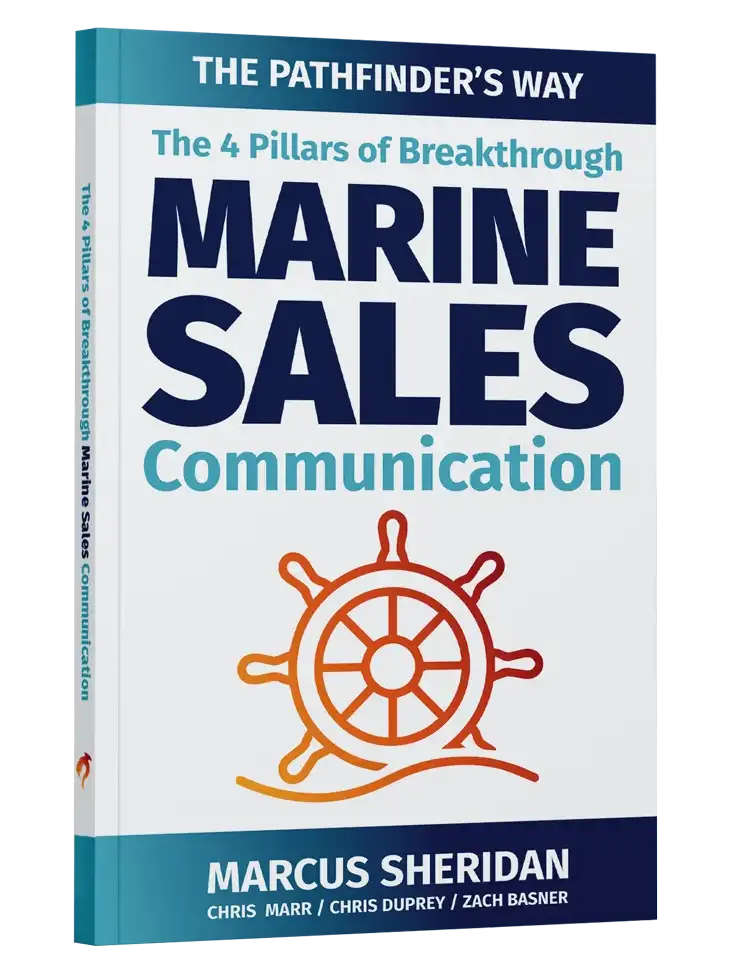
Download The 4 Pillars of Breakthrough Marine Sales Communication for FREE
Get the system that helps marine sales reps move beyond specs and walk-throughs and into high-trust, buyer-led conversations.
Alternatively, order your copy on Amazon: