

Here’s a situation every marine salesperson knows well.
Great conversation. Real connection. The couple seemed genuinely excited. They loved the boat. They took photos. They said they’d be in touch.
And then… nothing.
Weeks pass. You follow up. They’re “still thinking about it.” A few more weeks. The number goes cold.
What happened?
In most cases, the answer is simple: You never understood why they were there now. And because you didn’t know that, you couldn’t gauge whether the urgency was real — or whether “this summer” was actually “someday.”
There’s a question in the Foundational Five that fixes this completely.
Step 3: The Present
After you’ve established trust with the Honest Agreement and uncovered the emotional foundation with The Past, you ask this:
“Tell me — what made you want to own a new boat at this point in your life?”
Four words at the end of that question are doing an enormous amount of work: at this point in your life.
You’re not asking why they want a boat generally. Everyone in your showroom wants a boat. You’re asking why now. What changed? What shifted? What happened — or is happening — that made this the moment they walked through your door?
That answer tells you almost everything you need to know about urgency, motivation, and whether you have a serious buyer in front of you.
What Drives the Timing
In the years The Question First Group has spent training marine dealerships, the real answers to this question tend to fall into a few categories.
Life stage changes. Kids are getting older and there’s a growing awareness that the window is closing. Retirement just arrived after decades of saying “someday.” A health scare made life feel shorter than it did last year.
Triggering events. Their old boat finally died and the frustration tipped the scale. A friend took them out and they came home thinking about nothing else. They went to a boat show and something clicked.
Emotional drivers. They feel like they’re missing something as a parent. They want to reconnect with their spouse. They’re seeking the kind of freedom they haven’t felt in years.
Every one of these carries a different level of urgency. And until you understand which one is driving your prospect today, you’re flying blind.
The Mistake: Accepting the Surface Answer
This question almost always produces a surface answer first.
- “We just thought it was time to upgrade.”
- “We’ve been talking about it for a while.”
- “The kids are at the right age now.”
These are not real answers. They’re the polite, comfortable version of the truth.
Your job is to go deeper. Ask:
- “Time to upgrade — tell me more about what’s driving that.”
- “What would you say is different now versus a year ago?”
- “If you could point to one thing that made this the right time, what would it be?”
That last one is especially powerful. It forces them to identify their core motivation, often for the first time out loud. And when someone says their core motivation out loud, they own it. The urgency becomes real to them in a new way.
A Real Example
Picture a father who says: “Honestly? My daughter just turned sixteen. In two years she’ll be in college. My son is thirteen. I realized we probably only have three or four summers left where they’ll actually want to hang out with us on the water. After that, they’ll have jobs, friends, their own lives. If we don’t do this now, we’ll miss our window.”
That is not a “let me think about it for six months” buyer.
That is someone with a ticking clock and a very clear emotional stake in moving forward. This summer isn’t a preference — it’s a deadline. The window is real, and they know it.
Now look at your conversation differently. When that buyer hesitates at the price, you’re not talking about money anymore. You’re talking about whether they can justify missing three or four summers with their kids. That’s a completely different conversation. And you can only have it because you asked the right question.
Connecting the Past to the Present
One of the most powerful moments in a Foundational Five conversation is when The Present connects directly to The Past.
When someone describes a memory from Question 2 and then explains their timing in Step 3, you’ll sometimes see the thread yourself before they do. Name it.
“So it sounds like what you’re saying is — you had these incredible moments when your son was younger, and now you’re realizing those years with your daughter are running out. You’re trying to recreate what you had, before it’s too late. Is that right?”
Watch what happens when you say that.
People don’t just agree. They feel seen. Often genuinely surprised that you got it so quickly and so accurately. The trust that was already building from the Honest Agreement doubles in that moment.
That’s not a sales technique. That’s what happens when you actually listen.
What This Question Gives You
Beyond urgency, Step 3 gives you three things that are essential to every sale.
First, it tells you the timeline — which determines how you structure the rest of the conversation and any follow-up. Second, it tells you the real emotional driver — which becomes your selling language for everything that follows. Third, it often surfaces objections early — hesitations about money, about a spouse who isn’t fully on board, about concerns from past ownership — that you can address now instead of at the close.
As we covered in the first article, most deals don’t die at the close. They die in the middle, when something the salesperson never uncovered suddenly becomes a wall. Step 3 is one of the most powerful tools for making sure that doesn’t happen to you.
This Is Why Discovery Is Everything
The Honest Agreement gave you the foundation. The Past gave you the emotion. The Present gives you the urgency.
Together, those three elements mean that by the time you stand up from the table, you already know more about this buyer than the salesperson down the road will ever know — even if that competitor eventually shows them the same boat at the same price.
Because you didn’t just show them inventory. You understood them.
In the next article, we tackle the step that might be the most powerful of all five — The Future — and how getting your buyer to paint their perfect day on the water in vivid detail will do more to close the sale than anything you could ever say.
- Read the next article here: How to Sell More Boats by Selling the Dream First
- For the previous article click here: Boat Buyers Don’t Want a Boat. They Want a Feeling
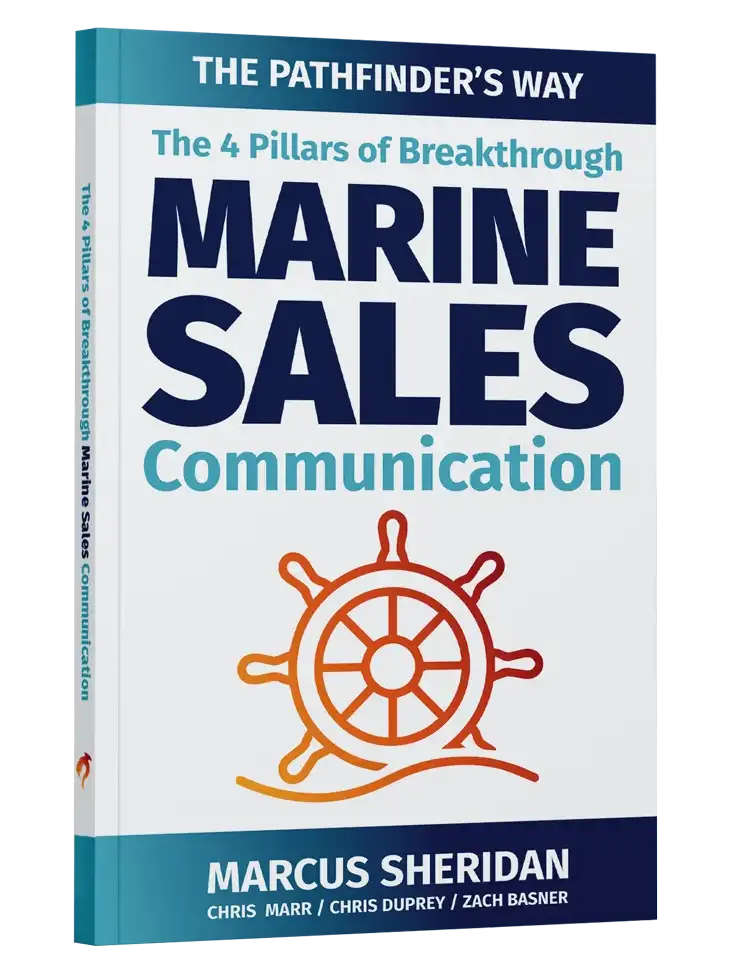
Download The 4 Pillars of Breakthrough Marine Sales Communication for FREE
Get the system that helps marine sales reps move beyond specs and walk-throughs and into high-trust, buyer-led conversations.
Alternatively, order your copy on Amazon: