
TL;DR – best sales training systems for home services (2026)
If you’re choosing a sales training system for a home services team, here’s the short answer:
There is no single “best” sales training company for home services — only companies designed to solve different problems at different stages.
Most owners start comparing options after inconsistent close rates, pricing pressure, or over-reliance on individual reps. The right choice depends on what’s actually breaking in your sales process.
- Close It Now → fast, same-day sales where speed and scripts matter
- Sandler Sales Training / Dave Yoho Associates → established teams needing structure, qualification, and discipline
- Sales Transformation Group → sales problems rooted in leadership, coaching, and management
- Service MVP → sales issues tied to wider operational and business constraints
- Top Rep Training → rapid onboarding for newer or growing teams
- The Blue Collar Success Group → motivation, confidence, and engagement gaps
- The Question First Group → teams selling complex, variable home services who need reps to think clearly, diagnose properly, and lead conversations without scripts
The biggest mistake we see isn’t choosing the wrong provider — it’s solving the wrong problem inside your home services sales operation.
Why more sales training isn’t fixing home service sales
Sales training in home services isn’t about collecting more tactics. Most home service sales teams already have scripts, pricing tools, and advice coming at them from every direction. The real challenge? Consistency — getting different reps to sell home services with the same level of confidence, clarity, and control.
This is something we see consistently in our work with home services businesses. Many clients come to us after investing in multiple sales training programs, only to find that results still depend too heavily on a few strong personalities rather than a repeatable, reliable way of selling home services.
We put together this guide that compares some of the most commonly considered sales training systems for home services to help you understand where each one works best, where it falls short, and how to choose the right fit for your home service sales team.
Why sales training systems matter
When we look at the home services sales teams we work with — and the research they come to us with — the pattern is usually the same. Sales training becomes a priority when close rates start to level off, pricing pressure increases, or too much success depends on a handful of strong personalities.
We see this across home services businesses of all sizes. The problem is rarely motivation or effort. More often, it’s that there’s no shared way of thinking about how to sell home services. Sales conversations vary from rep to rep, objections are handled inconsistently, and pricing decisions feel reactive instead of intentional.
The role of a strong home services sales training system is to reduce that guesswork. It gives home service sales teams a common language for qualifying prospects, explaining value, and guiding decisions — without relying on scripts that tend to break down in real, in-home sales conversations.
How we compared these options
We compared these sales training systems using the same questions our home services clients bring to us when they’re choosing a program — or trying to fix one that didn’t stick.
Each option was reviewed against a consistent set of criteria: who it’s best for, how it works in real home service sales conversations, how easy it is for teams to adopt, where it’s strong, and where it breaks down. We also looked at sales philosophy, capability development over time, speed to impact, and how well each approach scales as home service sales teams grow.
These are the practical factors home services business owners care about when they’re trying to build consistency and improve how they sell.
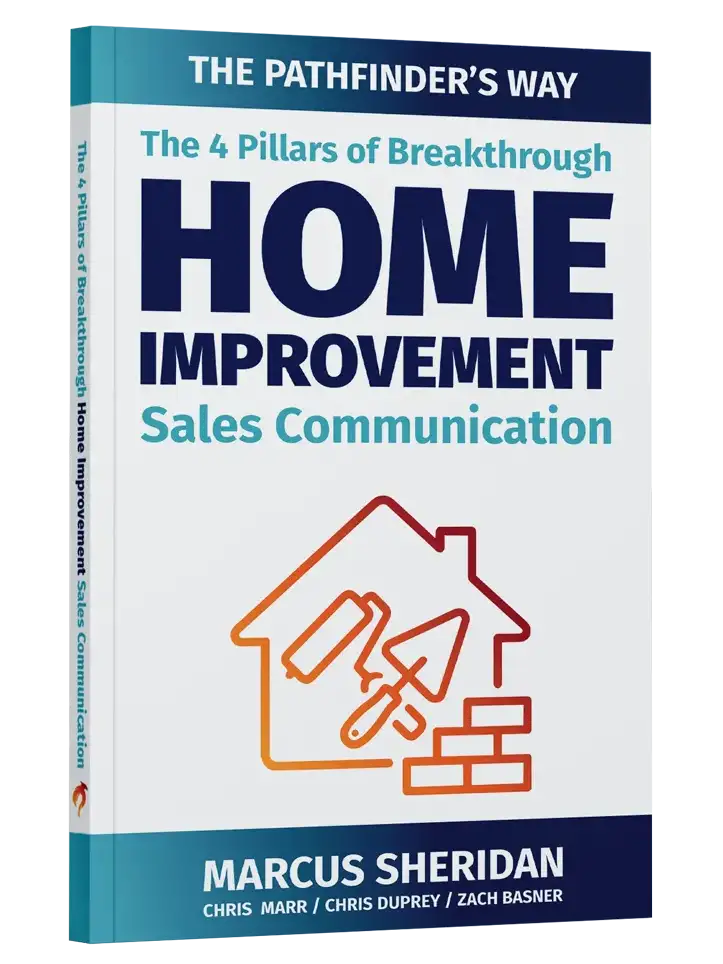
Download The 4 Pillars of Breakthrough Home Improvement Sales Communication for FREE
Stop rushing to specs and pricing. Learn the communication system that transforms surface-level estimates into controlled, high-trust conversations.
Alternatively, order your copy on Amazon:
The options explained

Sandler Training
sandler.com
Best for: Large sales teams
Key strength: Clear sales discipline
Pricing: Mid-high cost (typically $1k–$3k per person)
Sandler Training is often one of the first names home services business owners encounter when they start searching for sales training programmes to improve consistency and performance. It’s been around for decades, has a global footprint, and is widely known for bringing structure and discipline into sales teams, including those in home services and B2B environments.
We tend to see Sandler come up with more established home services sales teams that already have experience in the field and want clearer guardrails around qualification, deal progression, and closing. It’s usually explored when owners are less interested in quick-fix scripts and more focused on tightening how their team sells home services day to day.
We often see Sandler come up in conversations with clients who want more discipline and structure, especially after experiencing inconsistent results across their sales team.
How it works
From what we see, Sandler teaches a rules-based sales methodology with defined stages, behaviors, and guardrails. It emphasises qualification, upfront contracts, and controlling the sales process.
There’s a strong emphasis on:
- Upfront agreements
- Clear expectations
- Uncovering pain early
- Maintaining control of the sales process
Rather than pushing urgency or aggressive closing tactics, Sandler is designed to stop home service sales reps from wasting time on deals that shouldn’t be pursued in the first place.
How capability develops
When it’s reinforced properly, Sandler helps build solid sales discipline. Reps typically improve at qualifying prospects, setting boundaries, and avoiding discount-driven decisions.
Where we see teams struggle is when coaching drops off. Without regular reinforcement, the framework can feel theoretical and harder to apply in fast-moving home services sales conversations, especially in in-home or same-day environments.
Adoption curve
Adoption is medium, not instant. Sandler requires a mindset shift, and results tend to build over time rather than showing up overnight.
Time to impact
Impact is typically medium. Sandler typically delivers gradual improvements over several months, with the biggest gains coming from better qualification and discipline rather than quick spikes in close rates.
Coaching model
Ongoing coaching is essential. From what we’ve seen, Sandler works best when managers actively reinforce the methodology through weekly reviews and regular coaching with their home service sales teams.
Scalability
Sandler scales well when there’s strong management buy-in and a structured coaching rhythm in place.
What it does well
- Instils discipline and consistency
- Helps reps avoid chasing bad deals
- Encourages professional sales behavior
Where it falls short
- Can feel rigid or dated in some home services contexts
- Not industry-specific out of the box
- Requires commitment to ongoing coaching
Best use case
From the research we’ve done and the conversations we’ve had with home services business owners, Sandler tends to work best for established home service sales teams that want more structure and discipline in how they sell.
We’ve seen it land particularly well with teams that are willing to invest in ongoing coaching and reinforcement, and that care more about tightening qualification and consistency than chasing quick close-rate spikes. Where it’s less effective is with teams looking for fast onboarding or immediate results without much management involvement.
Pricing (What to expect)
Sandler Training pricing varies significantly but you can expect hundreds to thousands of dollars, with individual self-study courses starting lower, while comprehensive programs for teams can average around $1,750+ monthly, depending on participants, content, and support needed, with costs rising for customized, in-depth training and support. Expect costs between $1,000 and $3,000 per person for core programs, with potential for customized enterprise solutions to be much higher.
What customers say
At the time of writing, Sandler had a relatively small number of reviews featured on its site. What stands out is that the feedback focuses heavily on the quality of the trainer and how clearly the methodology is taught, rather than specific sales metrics or before-and-after results.
The reviews feel credible and professional, but are more about the learning experience than measurable sales impact.
If you’d like to dig in further, you can see the testimonials here.

Close It Now
closeitnow.net
Best for: High-volume, in-home
Key strength: Urgency and closes
Pricing: Low-cost courses to high-touch coaching; wide range
If you’re running a high-volume in-home sales operation and your priority is getting faster, more decisive closes, Close It Now is often one of the first programmes owners come across.
It’s built for businesses like HVAC, roofing, and home improvement where sales cycles are short and reps are expected to close on the spot.
We usually see Close It Now explored when home service sales teams are under pressure to improve close rates quickly. It tends to surface in conversations where speed, volume, and decisiveness matter more than long-term relationship building.
How it works
From what we’ve reviewed, Close It Now uses scripts and structured closing techniques to create urgency and move buyers to a decision quickly. Reps are taught what to say, when to say it, and how to handle common objections in a consistent way.
The emphasis is on execution and compliance rather than interpretation or judgement.
How capability develops
Capability development is intentionally narrow. The focus is on repetition and execution, not on teaching reps how to think through more complex or nuanced home services sales conversations.
Adoption curve
High. Scripts are easy to understand and apply, making rollout straightforward even for newer reps.
Time to impact
Teams often see quick improvements in close rates, sometimes within weeks, especially in high-volume, same-day close environments.
Coaching model
Low ongoing coaching requirement. Once scripts are memorised and reinforced, managers mainly focus on compliance rather than development.
Scalability
Scripts scale easily across teams. Adaptability does not. As sales situations become more complex or varied, the system can lose effectiveness.
What it does well
- Creates urgency and closing discipline
- Gives new reps confidence through structure
- Can quickly lift close rates in transactional environments
Where it falls short
- Can feel pushy to modern, informed buyers
- Breaks down in consultative or trust-led sales
- May hurt long-term relationships if overused
Best use case
Based on what we’ve reviewed, Close It Now works best in high-volume home services sales environments where fast decisions and closing discipline are the priority.
Pricing (What to expect)
“Close It Now” training pricing varies widely, from free resources and self-paced courses (around $94-$130/month) to intensive, personalized coaching programs from providers like Close It Now (by contacting them) or The Knowledge Academy (starting around £995 for general closing skills), with costs depending on format (online/in-person, group/one-on-one), duration, and depth of customization. Expect to pay anywhere from under $100 for basic online modules to thousands for high-touch, expert-led programs.
What customers say
Looking over on their website, Close It Now has a high volume of written reviews across Google and Facebook, ranging from very short endorsements to long, emotional success stories.
Many focus on fast, tangible outcomes, bigger ticket sizes, higher close rates, and immediate confidence in in-home sales.
The tone is enthusiastic and results-driven, which is reassuring if speed and revenue lift are the priority, and a clear signal that this is a close-focused system rather than a subtle or consultative one.
If you’re curious, you can browse the testimonials here.

Sales Transformation Group (STG)
salestransformationgroup.com
Best for: Growing home services teams
Key strength: Management enablement
Pricing: High investment; custom programmes; five-figures common
Sales Transformation Group (STG) is often explored by home services business owners who believe their sales performance issues are tied to sales management and leadership, not just frontline tactics.
When we’ve looked into STG, rather than focusing on scripts or quick wins, STG helps companies build a professional sales organization through stronger coaching, process, and leadership capability.
This is typically raised by clients who feel their sales issues are rooted in management, not just frontline selling.
How it works
STG focuses on process, coaching, and manager enablement alongside sales training. From what we’ve reviewed, it’s as much about how sales is managed day to day as how individual reps execute in the field.
How capability develops
Capability tends to build steadily over time, particularly when managers actively coach and reinforce the approach. The system relies on leadership adopting new habits, not just reps attending training.
Adoption curve
Medium. Adoption is moderate and leadership-led. Success depends heavily on managers embracing new coaching habits, not just reps attending training.
Time to impact
Medium. Impact builds over time, typically across a few months, as coaching rhythms and process discipline become consistent.
Coaching model
Coaching is central. Manager capability development is a core part of the system, not an optional add-on.
Scalability
Scales well in organisations with leadership depth.
What it does well
- Improves sales management, not just reps
- Builds long-term structure
- Aligns sales with operations
Where it falls short
- Heavier implementation
- Less suitable for small or owner-only teams
Best use case
Based on how STG is designed and positioned, it’s best suited for growing home services businesses that want to professionalize sales leadership and management, not just increase close rates.
Pricing (What to expect)
Pricing is typically custom and varies widely based on company size, program depth, and duration. From what we’ve seen, investments often range from the thousands into the tens of thousands of dollars, reflecting the leadership, coaching, and process-heavy nature of the work.
What customers say
Spending time with Sales Transformation Group’s testimonials, most of the feedback comes through longer-form video stories from owners and sales leaders.
They focus far more on leadership habits, coaching behavior, and how sales is managed over time than on quick jumps in close rates. The tone makes it clear this is a longer-term commitment to structural change, not a fast fix.
You can view customer testimonial videos directly on the Sales Transformation Group website.

Service MVP
servicemvp.com
Best for: Owner-led service businesses
Key strength: Operational clarity
Pricing: Free to monthly subscriptions; higher-cost coaching optional
Service MVP is often considered by home services business owners when sales issues feel connected to broader operational or leadership challenges, not just sales skills alone.
We usually hear Service MVP mentioned when clients feel sales problems are part of a wider operational challenge rather than something that can be fixed with sales training alone.
Rather than acting as a pure sales training provider, Service MVP positions itself as a business consulting and systems partner that works across sales, operations, and leadership.
How it works
Service MVP works across sales, operations, leadership, and systems, helping owners improve the home services business as a whole.
How capability develops
Sales capability typically improves indirectly. As systems, structure, and clarity improve, sales performance often follows.
Adoption curve
Medium. Adoption is gradual. Changes are implemented across systems, processes, and leadership behaviours rather than through quick sales tactics.
Time to impact
Medium. Results emerge steadily over months, with sales improvements often following broader operational clarity.
Coaching model
Consulting-led support with advisory check-ins rather than day-to-day sales coaching.
Scalability
Strong operational scalability, sales depth depends on implementation.
What it does well
- Provides business-wide clarity
- Improves structure and accountability
Where it falls short
- Sales training is not always the primary focus
- Less tactical for frontline reps
Best use case
This is the option we kept coming back to when sales problems didn’t exist in isolation. Looking at how Service MVP is positioned and used, it fits home services businesses where inconsistent sales results are tied to broader issues with systems, structure, or leadership.
If the sales team is feeling the impact of operational gaps elsewhere in the business, Service MVP is designed to address that root cause rather than applying a sales-only fix.
Pricing (What to expect)
Service MVP has a tiered pricing model with options that make entry easy and scale up into more comprehensive training:
A free basic tier that gives access to a few introductory courses — useful if you just want to explore the content without commitment.
An individual plan ($50/month) that unlocks the full training library, quizzes, and community forum — good for owners or small teams learning independently.
A team plan ($100/month plus ~$15 per additional user) that adds a tracking dashboard and helps you assign and monitor training across multiple employees.
There are also annual coaching and guided training programmes that sit at a significantly higher investment level and include personalised support and strategic planning, but those vary based on your business size and goals (you’d usually discuss the exact pricing with Service MVP directly).
What customers say
When we reviewed Service MVP’s testimonials, they were a mix of videos and written reviews.
What stood out was how often people mentioned their coach and the support they got, rather than specific sales metrics.
That points to a coaching-led model more than a pure sales training system.
To see the full range of feedback, you can find the testimonials here.
Download The 4 Pillars of Breakthrough Home Improvement Sales Communication for FREE
Stop rushing to specs and pricing. Learn the communication system that transforms surface-level estimates into controlled, high-trust conversations.
Alternatively, order your copy on Amazon:

Forrest Performance Group
fpg.com
Best for: In-home sales organisations
Key strength: In-home focus
Pricing: Custom mid-range pricing; in-person training costs thousands
Forrest Performance Group focuses on in-home sales training with a strong emphasis on consultative selling, particularly for replacement and big-ticket home services such as HVAC, plumbing, and home improvement.
When we looked into Forrest Performance Group, it consistently showed up as an option for home service sales teams selling similar types of work day in and day out — especially where owners want a clearer, more disciplined consultative flow inside the home. It’s typically explored when teams want more structure in how in-home sales conversations are run, rather than more closing pressure.
How it works
The training is built specifically for in-home sales environments and follows a structured, consultative model designed to guide homeowners through a decision in a consistent way.
How capability develops
Capability development is moderate. Reps gain structure and confidence but within a defined model.
Adoption curve
Adoption is medium. Reps need time to get comfortable with the structured consultative flow in real in-home conversations.
Time to impact
Medium. Teams typically see meaningful improvements within a few months as confidence and consistency increase.
Coaching model
Usually workshop-based with follow-up support. Ongoing impact improves when managers reinforce the process.
Scalability
This approach scales best in home service sales teams that sell similar deal types in similar ways.
What it does well
- Strong in-home sales focus
- Clear consultative structure
Where it falls short
- Less flexible for varied sales models
- Can feel prescriptive
Best use case
This is a strong fit for in-home home service sales teams selling consistent, high-ticket replacement work who want a defined consultative structure they can apply across the team.
Pricing (What to expect)
Pricing isn’t publicly listed. Based on what we’ve reviewed, expect training investments in the thousands of dollars, with final pricing varying depending on scope, format, and customization.
What customers say
When we looked through Forrest Performance Group’s reviews, most of them were written testimonials rather than polished case studies.
A lot of the feedback focuses on the quality of the people they place or train, and how well those individuals perform in real in-home sales environments.
It reads as very practical and execution-focused, especially for replacement sales, rather than about broader sales philosophy or long-term capability building.
If you would like to take a look yourself we’ve made sure to attach the link.

Prime Time Consulting
primetimeconsulting.net
Best for: Replacement sales teams
Key strength: Pricing & close control
Pricing: Custom consulting; typically $150–$600+ per hour
Prime Time Consulting is most often associated with replacement-focused home services sales, where pricing confidence and control in high-value conversations matter more than volume.
We tend to see Prime Time Consulting come up when home services businesses want their sales teams to feel firmer and more decisive in pricing discussions — particularly in HVAC, plumbing, and other replacement-driven sales models. It’s less about broad sales theory and more about tightening execution where money is on the line.
How it works
They teach a structured close-focused sales process with emphasis on pricing and decision-making.
How capability develops
Capability development is moderate and execution-led. Reps tend to build confidence through repetition, especially around pricing conversations.
Adoption curve
Medium. The process is clear, but reps need repetition to build confidence around pricing conversations.
Time to impact
Often fast in replacement-focused environments, with noticeable gains appearing within weeks.
Coaching model
Some reinforcement required, particularly around pricing discipline and closing behaviour.
Scalability
This approach works best in clearly defined sales environments with consistent deal types.
What it does well
- Improves pricing confidence
- Supports close-rate improvements
Where it falls short
- Limited adaptability
- Less emphasis on judgement
Best use case
It is clear to see this is a strong fit for home service sales teams focused on replacement work who want more control and confidence in high-value pricing conversations, without adding unnecessary complexity.
Pricing (What to expect)
Prime Time Consulting pricing varies significantly by firm and service, but expect hourly rates from $150-$600+ for experts, project fees for specific engagements like Smartsheet support (monthly/longer-term) or sales coaching (package deals).
General consulting can range from $50/hr (beginner) to $300-$600+/hr (expert), with specialized tech/management consulting often at the higher end, using hourly, project, or retainer models.
What customers say
When we clicked through Prime Time Consulting’s reviews, it felt very owner-led.
People are talking about confidence in pricing and controlling high-value sales conversations, not overnight results.
It comes across as practical and focused, rather than flashy.
For full context, you can view the testimonials here.

Top Rep Training
topreptraining.com
Best for: New and mid-level reps
Key strength: Quick skill lift
Pricing: Custom pricing; mid-range bootcamps and coaching packages
Top Rep Training is often explored by home services business owners looking for fast sales onboarding and quick, practical improvement for new or mid-level sales reps.
As we spent time digging into Top Rep Training, it consistently showed up as an option for teams hiring newer or mid-level reps who want fast, practical fundamentals they can apply right away. It’s less about building deep sales judgement and more about helping reps feel confident and capable early on.
How it works
The training follows a bootcamp-style format focused on execution and core sales fundamentals. The emphasis is on doing, not theory.
How capability develops
Capability gains are front-loaded. Reps usually see short-term improvements quickly, but long-term depth is limited without additional reinforcement.
Adoption curve
Adoption is high. The bootcamp-style delivery makes it easy for home service sales reps to understand and apply the material quickly.
Time to impact
Impact is fast. Teams often see noticeable improvements in confidence and performance quickly, especially with new or inexperienced reps.
Coaching model
Ongoing coaching requirements are low. Without reinforcement, however, gains can fade over time.
Scalability
The model scales easily across teams, but depth remains shallow compared to more comprehensive systems.
What it does well
- Fast onboarding
- Clear fundamentals
Where it falls short
- Limited long-term development
- Not a complete system
Best use case
From what we have seen this works best for home service sales teams bringing on newer or less experienced reps who need to get up to speed quickly and build early confidence before layering in deeper sales capability.
Pricing (What to expect)
Top Rep Training does not publish fixed prices online for its main sales training programs; instead, it offers customized packages tailored to your business’s needs, which typically include a mix of bootcamps, coaching, and online content.
What customers say
Spending time on Top Rep Training’s testimonial page, most of the feedback comes through video reviews from owners and sales leaders.
A consistent theme is how quickly reps get up to speed and how useful the training is for building strong sales fundamentals.
The overall tone is practical and encouraging, especially for teams focused on effective onboarding and early confidence.
You can view customer testimonial videos directly on the Top Rep Training website.

The Blue Collar Success Group
thebluecollarsuccessgroup.com
Best for: Blue-collar service teams
Key strength: Trust-based selling
Pricing: Membership-based subscription; pricing not publicly listed
The Blue Collar Success Group appeals to blue-collar and home services business owners looking to boost confidence, motivation, and engagement across their sales and frontline teams.
As we reviewed how The Blue Collar Success Group positions itself, it stood out as a mindset and culture play rather than a traditional sales training system. It tends to come up when teams need a confidence lift or renewed energy, either alongside or before deeper sales skill development.
How it works
Role-based training with a strong motivational component.
How capability develops
Confidence tends to improve more than sales judgment. The focus is on mindset and engagement rather than technical selling skills.
Adoption curve
Adoption is high. The content is engaging and accessible, which makes it easy for home service sales teams and frontline staff to buy in quickly.
Time to impact
Impact is fast. Motivation and confidence often increase quickly, although sales performance gains may level off without additional skill development.
Coaching model
The coaching model seems to be quite light. Long-term impact typically depends on pairing this with more tactical sales or leadership training.
Scalability
Easy to roll out across your sales teams.
What it does well
- Improves confidence
- Easy to engage teams
Where it falls short
- Limited depth in sales thinking
- Not a full sales system
Best use case
This works best when the immediate goal is to raise confidence, energy, and engagement across a home services team, rather than to overhaul how sales conversations are run.
Pricing (What to expect)
The Blue Collar Success Group offers membership-based access to coaching, live events, training, and resources, but does not publish fixed pricing online for its membership tiers.
What customers say
After scrolling through Blue Collar Success Group’s testimonials, rather than client case studies and videos they differ with their reviews consist fully of Google reviews.
A lot of them mention specific instructors, events, or programmes, and the tone is consistently upbeat and appreciative.
It feels very community-driven and motivational, especially for teams looking to build confidence and engagement.
If you’d like to explore them directly, you can view the testimonials here.

Dave Yoho Associates
daveyoho.com
Best for: Traditional home services firms
Key strength: Trust-based selling
Pricing: Low-cost products to custom workshops; wide range
Dave Yoho Associates is most often considered by more traditional home services businesses that place a high value on professionalism, relationship-based selling, and long-term customer trust.
We usually hear Dave Yoho Associates mentioned by more traditional clients that place a premium on professionalism, relationship-building, and long-term customer trust.
How it works
The training follows a classic, relationship-led approach, with a strong emphasis on professionalism, credibility, and earning trust throughout the sales process.
How capability develops
Capability development is moderate, with the biggest gains showing up in relationship-building and professional sales behavior.
Adoption curve
Adoption is medium. The approach feels natural for traditional home service sales teams, but may require adjustment for faster-paced or more transactional sales environments.
Time to impact
Time to impact tends to be medium. Improvements tend to appear steadily over time as habits around professionalism and trust are reinforced.
Coaching model
Delivery is typically workshop-led, with optional follow-up rather than ongoing, hands-on coaching.
Scalability
This approach works best in stable, traditional teams where sales models and expectations don’t change frequently.
What it does well
- Trust-based selling
- Professional sales behaviour
Where it falls short
- Can feel dated
- Less suited to modern buying behaviour
Best use case
We would say this is a strong fit for home services sales teams that sell primarily on reputation, referrals, and long-term relationships, and want a sales approach that reinforces professionalism over pressure.
Pricing (What to expect)
We see that pricing with Dave Yoho Associates spans a wide range. Entry-level options include individual products and bundled training resources, typically starting in the hundreds of dollars, while more involved programs — such as virtual training or on-site consulting sessions — require a higher investment and are priced directly based on scope. The offering is broad, with resources covering sales, recruiting, and management for home services businesses, often packaged together.
What customers say
Last but certainly not least, when looking at the Dave Yoho Associates website testimonials, most of the feedback comes from long-standing home services companies.
The reviews focus on professionalism, trust, and relationship-based selling rather than dramatic short-term sales spikes.
It reads as steady, dependable, and values-led — especially for teams that care about reputation and long-term customer relationships.
If you want to look through them yourself, you can find the testimonials here.

Where The Question First Group (QFG) fits
Best for: Growing home services teams selling complex or variable work
Key strength: Improves sales judgment, confidence and conversation control
Pricing: Mid-range; varies by team size and coaching level
After reviewing the options above, one of the clearest patterns that emerges is this:
Most sales training systems optimize for either speed or depth — but rarely both.
The Question First Group (QFG) sits apart from many of the providers in this guide because it is designed to help sales teams connect with homeowners at a deeper level than scripted or process-driven systems allow.
Instead of leading with scripts, motivation, or rigid processes, QFG focuses on how people think in live conversations — so reps can stay present, ask better questions, read the situation accurately, and respond with confidence when pressure is high. That ability to think clearly is what allows genuine connection to happen, rather than forcing it through technique.
Importantly, QFG is not just a sales system. It is designed for the entire company. The same thinking frameworks apply to sales, leadership, and operations, creating a shared language for understanding people, diagnosing problems, and leading conversations consistently across the business.
That direction reflects the conversations we have every week with home services business owners who are tired of scripts breaking down and want their teams to build real trust with homeowners — not just “run the call,” but lead it with confidence, clarity, and control.
Adoption curve
Adoption is moderate. Reps aren’t asked to memorise scripts or adopt a new persona, but they are asked to slow down and change how they diagnose situations. This takes more effort than script-based systems, but less friction than large process-heavy rollouts.
Time to impact
Impact typically appears within weeks, especially in objection handling, pricing conversations, and overall confidence. Deeper gains — consistency, judgment, and reduced discounting — compound over time rather than spike briefly.
Coaching model
Coaching is a core part of our approach. QFG is designed to give managers a shared language for feedback, making coaching more practical and less subjective. Teams that actively coach see significantly stronger results.
How it compares overall
- Compared to script-led systems, QFG trades speed for flexibility and long-term capability.
- Compared to process-heavy methodologies, it’s lighter to implement and easier to apply in real conversations.
- Compared to motivational or bootcamp-style training, it goes deeper into judgement and decision-making.
When QFG is a strong fit
- You want your reps to connect naturally with homeowners, even in high-pressure pricing and objection-heavy conversations
- You want authority without scripts — salespeople who can lead the conversation without sounding rehearsed or salesy
- You care about confidence, tone, and trust, not just close rates
- You want higher profit margins driven by better diagnosis, stronger positioning, and less discounting
- You’re building company-wide capability that scales as the team grows, rather than relying on individual personalities
When another option may be better
- You need immediate structure for inexperienced reps
- Your sales model is highly transactional
- You don’t plan to invest in coaching or reinforcement
What we noticed from customer feedback
From working directly with our clients at The Question First Group, the feedback we hear most often is about confidence and control in real conversations.
What comes up again and again isn’t talk of scripts or techniques, but confidence, clarity, and control in high-stakes conversations — so reps can listen properly, respond in the moment, and build real trust and connection with homeowners.
Many of our customers describe the biggest shift as learning how to think and lead in the moment, rather than relying on rehearsed lines or rigid processes.
One revenue leader described it as more than just training, saying it felt like “a system that embeds world-class sales skills into the organization,” and noted how fundamentally different it was from other programmes they’d tried.
Another customer highlighted the longer-term impact, explaining that while they could have spent years trying to implement the same changes internally, the real difference came from having the right guidance and structure in place.
Several individual contributors describe the shift more personally — feeling less reactive, more confident, and better able to guide high-stakes conversations with clarity rather than hesitation.
A small selection of customer testimonials is available here if you’d like to read the full feedback.
A note on pricing and expectations
Pricing in sales training varies significantly based on team size, delivery format, level of coaching, and length of engagement.
The ranges below are intended to help you set realistic expectations and avoid surprises, not to replace a direct conversation with each provider.
In most cases, the biggest cost isn’t the program itself — it’s choosing a system that doesn’t get adopted, coached, or sustained.
Final thoughts: choosing the right sales training system for your home services business
If you take one thing away from this guide, it should be this:
There is no universally “best” sales training system for home services — only systems that are well-matched or poorly matched to how your business actually sells.
Across all the options reviewed, clear patterns emerge:
- Some systems optimize for speed and immediate results, often through scripts and tight structure.
- Others focus on discipline, process, and management, delivering steadier gains over time.
- A few aim to improve the way salespeople think and communicate, building longer-term capability but requiring more engagement.
Where many owners go wrong isn’t in choosing a bad provider — it’s in choosing a system that solves the wrong problem.
Scripts won’t fix a judgment problem. Motivation won’t fix missing structure. And more process won’t fix conversations that are already breaking down.
Before deciding, it’s worth being honest about:
- How experienced your home service sales team really is
- How much coaching and leadership support you can provide
- How quickly you need results
- Whether you’re optimizing for short-term lift or long-term consistency
The purpose of this article isn’t to steer you toward a single answer.
It’s based on the same conversations we have with clients who want to avoid expensive mistakes and choose a sales training system that actually sticks.
If a sales training system helps your team sell with more confidence, consistency, and control — without relying on guesswork — it’s doing its job.
Everything else is just noise.
Download The 4 Pillars of Breakthrough Home Improvement Sales Communication for FREE
Stop rushing to specs and pricing. Learn the communication system that transforms surface-level estimates into controlled, high-trust conversations.
Alternatively, order your copy on Amazon: