

Something happens at the end of almost every home improvement consultation that nobody talks about honestly: people often face home improvement sales objections that can be challenging to overcome.
The rep wraps up. The homeowner walks them to the door. Everyone smiles. The homeowner says something like “this has been really helpful, we’ll be in touch.” The rep drives away feeling good about it.
And then nothing.
No call. No reply to the follow-up email. The lead just quietly disappears.
What went wrong?
In most cases, the answer isn’t the price. It isn’t the product. It isn’t that they found someone better.
It’s that the homeowner had a real concern — about the design, the cost, the timing, something — and instead of saying so, they smiled and said they’d be in touch.
Because that’s what polite people do.
The Real Cost of Home Improvement Sales Objections
Let me think about it is the most common home improvement sales objection — and the most expensive.
It sounds like progress. It feels like a maybe. It is almost always a no that the homeowner didn’t want to say to your face.
What it usually means is: Something here isn’t right, but I don’t want to create an awkward moment, so I’ll just disappear later.
Maybe they didn’t like the design direction but didn’t want to seem difficult. Maybe the number was higher than they expected and they felt embarrassed to say so. Maybe one spouse is not on board and the other didn’t want to have that conversation in front of a stranger.
Whatever it was, you never found out. Because the environment you created didn’t make honesty feel safe.
And that’s the real problem.
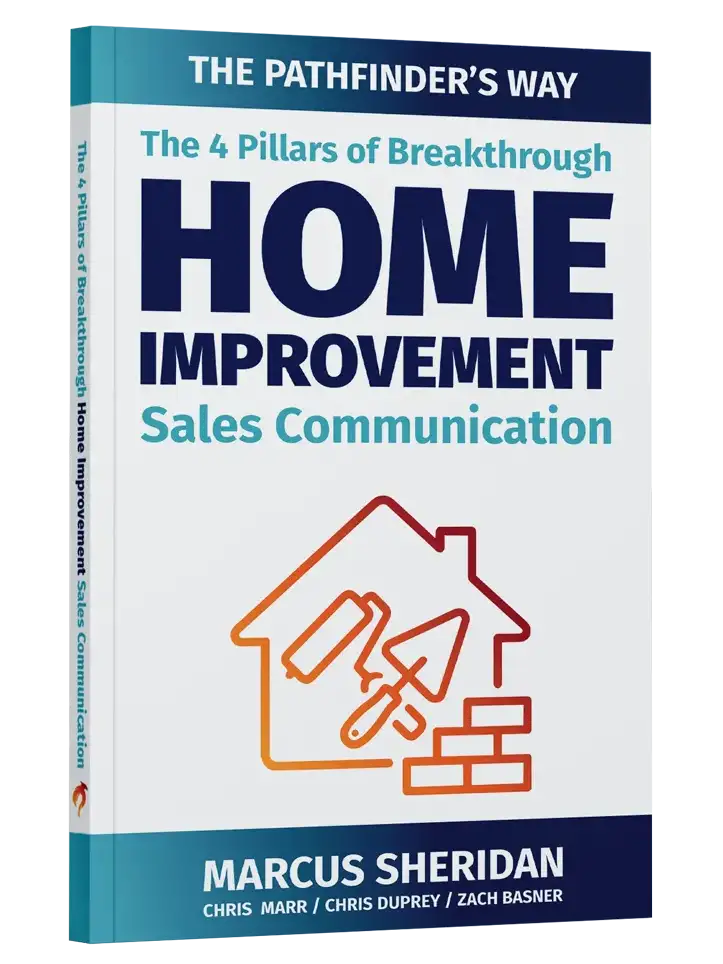
Download The 4 Pillars of Breakthrough Home Improvement Sales Communication for FREE
Stop rushing to specs and pricing. Learn the communication system that transforms surface-level estimates into controlled, high-trust conversations.
Alternatively, order your copy on Amazon:
Why Home Improvement Sales Objections Stay Hidden
Think about what a home improvement consultation feels like from the other side of the table.
Someone comes to their home. This person is a professional, clearly knows their stuff, has a whole process. The homeowner doesn’t want to seem demanding or unsophisticated. They don’t want to hurt anyone’s feelings. They’re perfectly polite about the whole thing.
In that dynamic, raising a real concern feels risky. Saying “I don’t love that layout” might offend the rep who just spent an hour putting it together. Saying “that’s more than we were thinking” feels like admitting they can’t afford it. Saying “I need to talk to my husband first” sounds like a brush-off even when it’s genuine.
So they default to the path of least resistance. They let you leave thinking everything is fine. And then they quietly move on.
You practiced your entire consultation on a homeowner who was never going to tell you what they actually thought.
The Honest Agreement
The Honest Agreement is Step 1 of the Foundational Five, and it solves this problem directly.
It’s not a technique. It’s a verbal contract — a commitment you make with the homeowner at the very start of the conversation, before anything else happens, that establishes honesty as the foundation of everything that follows.
Here’s what it sounds like in practice:
“Mr. and Mrs. Johnson, before we get started, I’d like to address something important. This project is a big deal — you’re looking at making a significant investment, and I know you don’t want to make any mistakes. My commitment to you is that I’m going to be 100% open and honest with you throughout this process — holding nothing back. Fair?”
Pause. Let that land. Wait for a yes.
“And because this matters so much, I’m going to ask you some questions that other contractors probably haven’t asked you. Before we even walk through the space, we’re going to sit down and really get to know what’s driving this decision. That way we can make sure we create exactly the right solution for you. Can we do that?”
Wait for agreement again.
“At the same time, just as I’m going to be honest with you, I need you to be honest with me. I promise — you will not hurt my feelings by telling me the truth. So if I show you something today that you don’t like, what do you need to do?”
Let them say it. “Tell you.” “Be honest.”
“Exactly. Because otherwise we make mistakes. Will you commit to being completely open with me about this?”
Then wait for a real yes. Not a nod. Not “sure.” A genuine verbal commitment.
That exchange — done with real eye contact, genuine warmth, and actual pauses — changes the entire nature of what follows.
What Shifts in the Room
When The Honest Agreement is delivered well, something visible happens.
People physically relax. Shoulders drop. The slightly guarded, slightly performative energy that most homeowners walk into a consultation with starts to dissolve. Because they realize — often without being able to articulate why — that this feels different.
You’ve named something that usually goes unspoken. You’ve made it not just acceptable but expected for them to tell you the truth. And because they’ve verbally committed to doing that, when something doesn’t feel right later in the conversation, they say so.
When the price gives them pause, they tell you instead of going quiet. When the design isn’t quite what they had in mind, they speak up instead of smiling and leaving. When there’s a concern about the spouse who couldn’t be there today, it surfaces now instead of killing the deal three days later over text.
And critically — you can reference it throughout the conversation.
“Remember earlier when you committed to being straight with me. What are you really thinking about this?”
That’s a question you could never ask without the foundation you just built.
A Few Things to Watch Out For
Don’t rush through it. This is not a script to race past. Each section needs a moment to land. Slow down.
Don’t accept weak responses. “How does that sound?” gets you “fine.” Fine is not a commitment. You need a real yes. The whole point is the verbal agreement — don’t move forward without it.
Don’t make it robotic. The specific words matter less than the four things the script needs to do: establish the importance of the project, make your commitment to honesty clear, let them know you’re going to ask deeper questions, and get their commitment to honesty in return. Once you understand those four elements, you can make it sound like you.
Don’t forget to use it later. When hesitation shows up mid-presentation, you have something to come back to. That callback is half the value.
Why This Changes Everything That Comes After
The Honest Agreement doesn’t just improve one conversation. It changes the relationship.
When homeowners feel safe telling you the truth, they do. And when they tell you the truth, you can actually solve their real problem. And when you solve their real problem, they hire you — and they send everyone they know your way.
It also makes the next four questions in the Foundational Five dramatically more powerful. Because once this foundation is in place, the answers you get are real. Not the polished, guarded version homeowners usually give contractors.
The actual truth.
As we talked about in the first article, the breakdown in home improvement sales isn’t the product or the price. It’s the connection. The Honest Agreement is where that connection starts.
In the next article, we look at Step 2 — The Past — and why one simple question about a homeowner’s relationship with their home might be the most underused tool in your entire sales process.
- Read the next article here: The Home Improvement Sales Question That Changes Everything Before You Walk the Space
- Click here for the previous blog: Why Most Home Improvement Salespeople Are Losing Deals Before They Even Start
Download The 4 Pillars of Breakthrough Home Improvement Sales Communication for FREE
Stop rushing to specs and pricing. Learn the communication system that transforms surface-level estimates into controlled, high-trust conversations.
Alternatively, order your copy on Amazon: